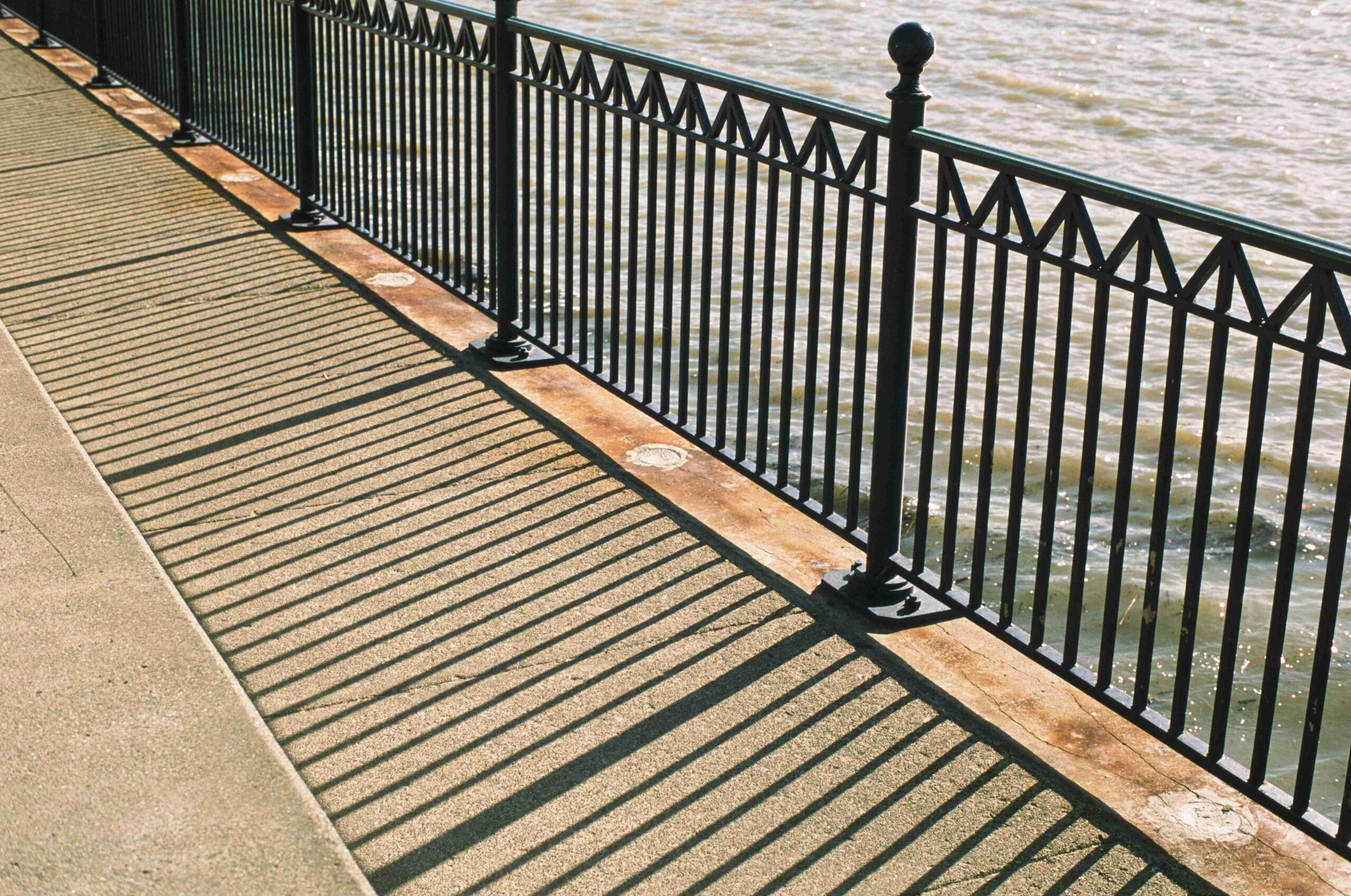

When installing an aluminum fence on a concrete surface—whether for a driveway, pool deck, or property line—there are two primary methods: core drilling and deck mounting. Each approach has its own advantages, but one offers significantly greater stability and long-term reliability.
When You Might Need to Install Fencing on Concrete
While much of the country has plenty of open ground, there are common scenarios where concrete installation makes sense:
- Driveways – In urban or suburban settings, property lines often end at the edge of a concrete driveway. A fence installed there can mark the boundary and prevent neighbors from parking too close or blocking access.
- Pool Decks – A concrete pool deck provides a solid base for a safety fence, helping keep children and pets away from the water when supervision isn’t possible.
- Patios or Rooftop Spaces – Any elevated or paved outdoor area may require fencing for safety or privacy.
Method 1: Core Drilling
Core drilling involves using a diamond core drill—a specialized tool that cuts a clean, cylindrical hole into the concrete. While these drills can be expensive to purchase, they are widely available for rent at reasonable rates.
Once the hole is drilled (and any residual water from the drilling process is removed), the fence post is set directly into the concrete. This method embeds the post firmly in place, providing maximum stability. For this reason, core drilling is the preferred method recommended by most fencing professionals.
Method 2: Deck Mounting
Deck mounting uses surface-mounted brackets to attach the fence post to the top or side of the concrete. Typically, a post bracket with a flat base is secured using concrete screws driven in with a hammer drill.
In some cases where the concrete slab is elevated, brackets can be attached to the side rather than the top. While this approach requires less specialized equipment and can be faster to install, it offers considerably less structural security.
The deck mounting system relies on multiple small components—the screws, the bracket, and the post itself. Over time, concrete screws can loosen as they wear against the surrounding material. Any failure in these components can compromise the fence’s stability.
Which Method Is Better?
For security and longevity, core drilling is the superior choice. Although it involves a bit more effort and upfront cost, it anchors the post as a single, continuous piece within the concrete. This reduces the number of potential failure points and ensures the fence remains stable over time.
Even if the concrete around a core-drilled post eventually loosens, the post remains in place and can be stabilized by adding a small amount of cement, gravel, or sand around it—a relatively simple fix.
Deck mounting may be suitable for very light-duty applications or temporary installations, but for permanent fencing where safety and durability matter, core drilling is the recommended approach.
A Note on Material Choice
Aluminum fencing is well-suited for concrete installations due to its dimensional stability. Unlike wood, which expands and contracts with temperature and humidity changes, aluminum remains consistent—reducing the risk of loosening or structural stress over time. Vinyl fencing can also be installed successfully using these methods.
Whether you’re securing a driveway, enclosing a pool area, or defining a property boundary on a paved surface, choosing the right installation method is key to ensuring your fence performs reliably for years to come. Core drilling offers the strength and peace of mind that surface mounting simply cannot match.